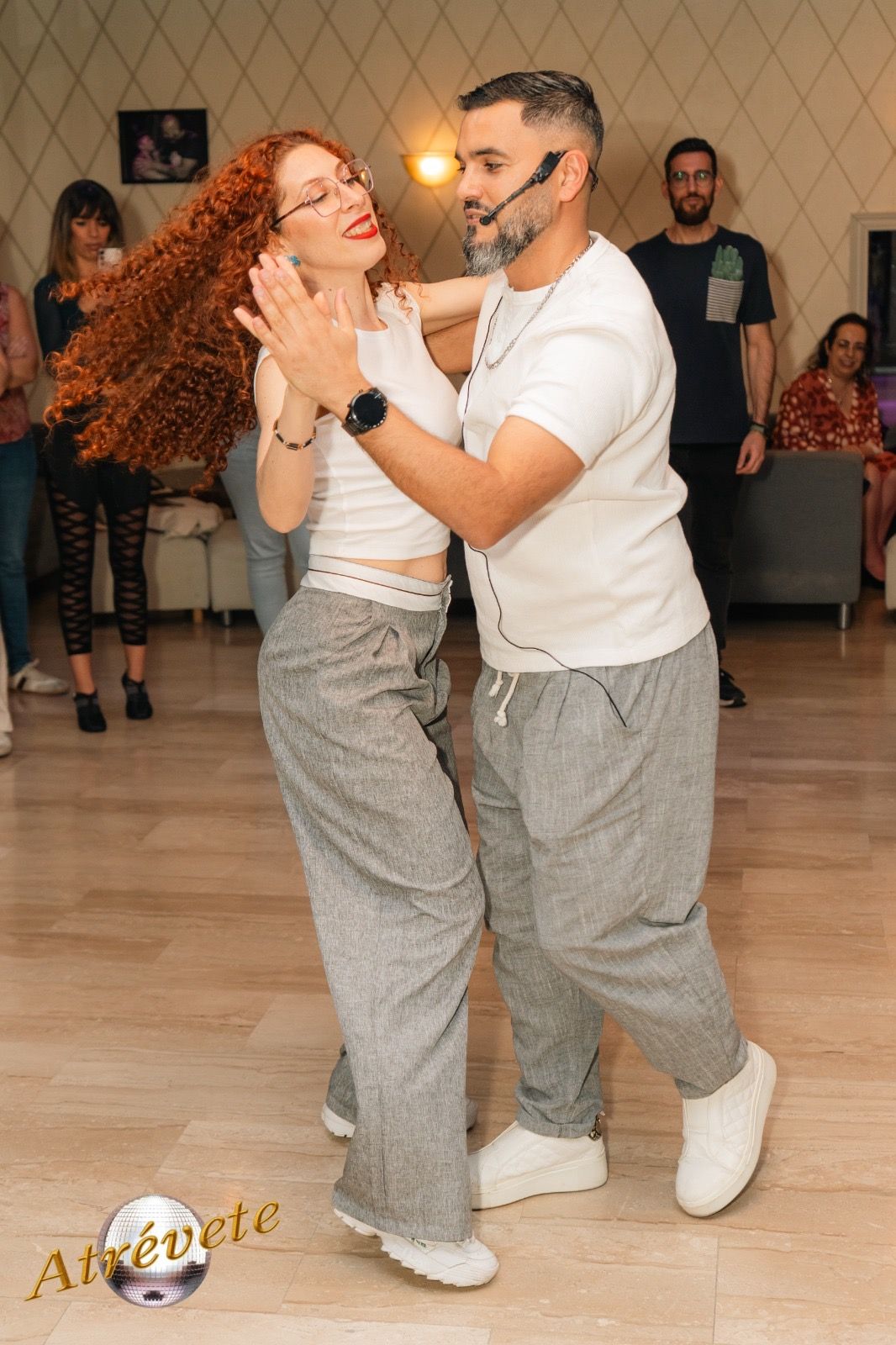
No es que te falten figuras
Cuando alguien siente que su salsa "no luce", la reacción típica es aprender más figuras. Casi nunca es eso. Lo que hace que un baile se vea rígido está en la base, y se repite en casi todos los niveles.
Error 1: hombros tensos
Cuando estás concentrado, los hombros suben solos. Y con los hombros arriba, los brazos se endurecen, el cuello se bloquea y el movimiento del torso desaparece.
Corrección: antes de empezar cada canción, sube los hombros a propósito y déjalos caer. Durante el baile, revisa de vez en cuando: ¿están donde los dejaste?
Error 2: pies sin paso de peso
Mucha gente pisa con el pie pero deja el cuerpo atrás. El paso existe, pero el peso no se traslada, y el baile se ve "de puntillas" y sin sabor. El movimiento de cadera que buscas sale justamente del cambio de peso completo.
Corrección: baila el básico despacio y asegúrate de que en cada paso el peso termina entero sobre el pie que pisa. Si puedes levantar el otro pie sin perder el equilibrio, el peso está bien.
Error 3: más pasos que música
Encadenar figuras sin escuchar la canción hace que el baile vaya por un lado y la música por otro. Se nota enseguida, aunque las figuras estén bien hechas.
Corrección: pon el pulso antes que las figuras. Primero el tiempo, después el adorno.
La prueba que recomendamos
Grábate bailando solo el básico durante una canción entera. Sin figuras. Si los hombros suben, si los pies no pasan el peso o si te aburres a los veinte segundos, ahí está el trabajo. Es incómodo verlo, pero es la forma más rápida de mejorar.
Bailar con menos
La salsa que se ve suelta casi siempre tiene menos pasos de los que parece: hombros relajados, básico con peso de verdad y el pulso marcando el camino. Con eso, las figuras que ya sabes empiezan a verse mejor sin aprender ninguna nueva.
It's not that you need more figures
When someone feels their salsa "doesn't look good", the usual reaction is to learn more figures. It's almost never that. What makes dancing look stiff is in the foundation, and it shows up at almost every level.
Mistake 1: tense shoulders
When you concentrate, your shoulders rise on their own. With shoulders up, arms harden, the neck locks and torso movement disappears.
Fix: before each song, lift your shoulders on purpose and let them drop. While dancing, check from time to time: are they still where you left them?
Mistake 2: feet without weight transfer
Many people step with the foot but leave the body behind. The step exists but the weight doesn't move, and the dance looks "on tiptoe" and flavourless. The hip movement you're after comes precisely from a full weight change.
Fix: dance the basic slowly and make sure each step ends with your weight fully on the stepping foot. If you can lift the other foot without losing balance, the weight is right.
Mistake 3: more steps than music
Chaining figures without listening to the song makes the dance go one way and the music another. It shows right away, even if the figures are well done.
Fix: put the pulse before the figures. Timing first, decoration second.
The test we recommend
Film yourself dancing only the basic for a whole song. No figures. If your shoulders rise, your feet don't transfer weight or you're bored after twenty seconds, that's where the work is. It's uncomfortable to watch, but it's the fastest way to improve.
Dance with less
Salsa that looks relaxed almost always has fewer steps than it seems: loose shoulders, a basic with real weight and the pulse leading the way. With that, the figures you already know start looking better without learning a single new one.