Málaga tiene mucha oferta, y eso es bueno
Hay escuelas de salsa y bachata por toda la ciudad y por toda la Costa del Sol. Es una gran noticia: significa que la comunidad está viva. Pero también significa que elegir cuesta, sobre todo si nunca has bailado y no sabes qué mirar.
Estos son los siete criterios que de verdad predicen si vas a seguir bailando dentro de un año. No incluyen "cuál es la más famosa", porque eso no predice nada.
1. ¿Los grupos están divididos por nivel de verdad?
Una clase donde conviven el que lleva dos semanas y el que lleva dos años no funciona para ninguno de los dos: uno se ahoga y el otro se aburre.
Pregunta: ¿Cuántos niveles tenéis y cómo decidís en cuál entro?
Mala señal: "aquí todos juntos, ya te vas adaptando".
2. ¿Quién te enseña y qué ha hecho?
No hace falta que tu profesor sea campeón del mundo. Sí hace falta que sepa por qué te pide lo que te pide. La diferencia entre alguien que te enseña una figura y alguien que te enseña la mecánica detrás de esa figura se nota en el mes tres, cuando uno de los dos alumnos puede improvisar y el otro no.
Pregunta: ¿Dónde os habéis formado? ¿Seguís bailando y compitiendo?
3. ¿Se rota de pareja?
Bailar siempre con la misma persona te da una falsa sensación de nivel: aprendes sus costumbres, no la técnica. La rotación es incómoda al principio y es la razón por la que a los tres meses puedes salir a un social y bailar con cualquiera.
Además resuelve el problema práctico: puedes venir solo.
Mala señal: que te exijan pareja fija para apuntarte.
4. ¿Cuánta gente hay por clase?
Un grupo enorme significa poca corrección individual. Y la corrección es literalmente por lo que pagas: los vídeos de YouTube son gratis; lo que no es gratis es que alguien te diga que estás cargando el peso atrás.
Pregunta: ¿Cuántos alumnos hay por grupo? ¿Corregís uno por uno?
5. ¿Salen a bailar?
Esta es la que casi nadie mira y la que más determina si vas a seguir. Una escuela que solo da clase te enseña pasos. Una escuela que organiza prácticas y sale a los sociales te mete en una comunidad, y la comunidad es lo que hace que sigas viniendo en enero, cuando llueve y da pereza.
Pregunta: ¿Organizáis prácticas o salidas? ¿Vais a los sociales con los alumnos?
6. ¿Hay un profesor o hay dos?
Este criterio no lo mira casi nadie y es de los que más cambian tu aprendizaje.
En una clase de baile en pareja hay dos roles distintos: líder y follower. No son el mismo trabajo. El líder tiene que aprender a proponer con claridad; el follower, a leer la marca, a girar sobre su propio eje y a mantener su línea. Son dos técnicas diferentes, con problemas diferentes.
Cuando la clase la da una sola persona, pasa lo inevitable: explica bien su rol y aproxima el otro. Si el profesor es líder, los followers de la sala reciben la versión resumida —"tú déjate llevar"—, que es justo el consejo que crea followers pasivos que no giran bien y acaban culpándose de errores que no son suyos. Y al revés.
Cuando la clase la dan dos, cada rol tiene delante a alguien que lo baila de verdad. Ves la figura desde los dos lados, escuchas la corrección específica de tu papel y, sobre todo, ves cómo se conecta la pareja entera, que es lo que en realidad estás aprendiendo.
Pregunta: ¿Quién da la clase? ¿Hay alguien que enseñe específicamente el rol de follower?
Mala señal: un solo profesor que baila un único rol y demuestra el otro "de memoria".
7. ¿Puedes probar antes de pagar?
Ninguna web te va a decir si te sientes cómodo en esa sala, con esa gente y con esa forma de enseñar. Eso solo se sabe entrando.
Mala señal: que te pidan pagar un trimestre completo sin haber pisado la clase.
La pregunta extra que lo resume todo
Cuando llames o escribas, fíjate en una cosa: ¿te preguntan por ti? ¿Por tu nivel, tu horario, tu objetivo, si vienes solo? ¿O te mandan directamente el precio y la cuenta bancaria?
La respuesta a eso te dice bastante sobre cómo te van a tratar cuando seas alumno.
Checklist para llevarte
- [ ] Grupos separados por nivel
- [ ] Profesorado con formación y trayectoria comprobable
- [ ] Se rota de pareja / se puede venir solo
- [ ] Grupos de tamaño razonable y corrección individual
- [ ] Prácticas y salidas a sociales
- [ ] Dos profesores en clase: alguien que enseñe cada rol
- [ ] Clase de prueba disponible
- [ ] (Extra) Condiciones claras: recuperación de clases, sin permanencia sorpresa
Si una escuela cumple cinco de siete, vas bien.
Nuestra parte
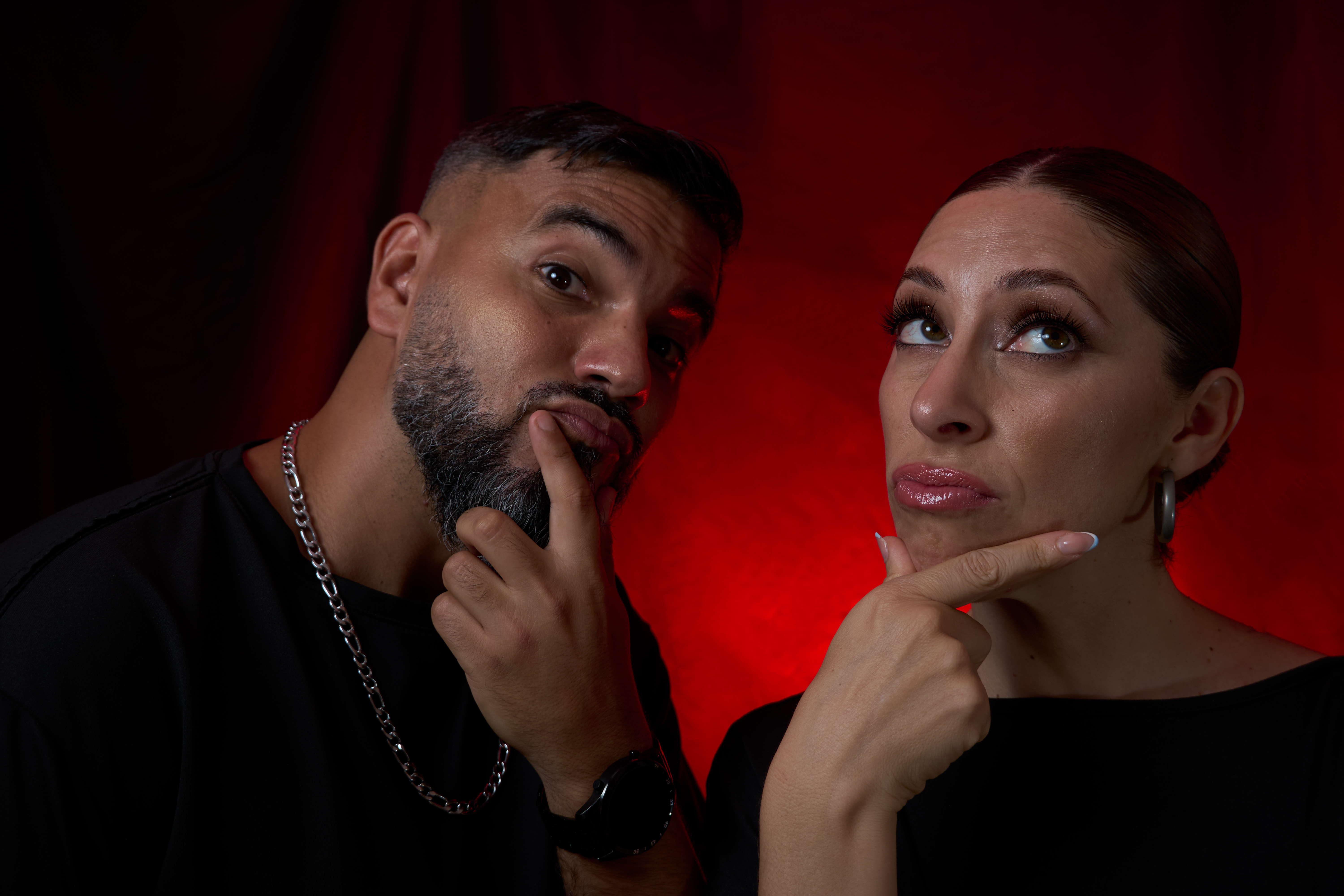
Nosotros somos Juan y Ceci: campeones sudamericanos de salsa, podio mundial y más de 20 años enseñando en siete países. Damos clase en Málaga (Pura Pasión) y en Alhaurín de la Torre (Escuela de Danza Noelia), en grupos por nivel, con rotación, prácticas y salidas.
Y damos la clase los dos, siempre. Uno enseñando el rol de líder y otra el de follower, cada uno bailando lo que enseña. Para nosotros no es un lujo: es la única forma que conocemos de que las dos mitades de la pareja aprendan igual de bien.
Pero no te fíes de este párrafo. Ven, prueba una clase y aplica la lista de arriba, aquí o donde quieras. Si terminas bailando —con nosotros o con otro— la comunidad salsera de Málaga gana igual.
Málaga has a lot on offer, and that's good
There are salsa and bachata schools all over the city and the Costa del Sol. That's great news: it means the community is alive. But it also means choosing is hard — especially if you've never danced and don't know what to look for.
These are the seven criteria that genuinely predict whether you'll keep dancing.
1. Are groups split by level?
A single mixed group means the beginners are lost and the advanced students are bored. Separate levels mean someone thought about progression.
Ask: How many levels do you have? How do I know which one is mine?
2. Who teaches, and what's their track record?
Being a good dancer and being a good teacher are different jobs. Look for verifiable training and trajectory — competition, stage, years teaching — and above all, look for how they explain.
Bad sign: nobody can tell you who the teachers are or where they come from.
3. Do partners rotate?
Always dancing with the same person gives you a false sense of level: you learn their habits, not the technique. Rotation is uncomfortable at first, and it's the reason why three months in you can go to a social and dance with anyone.
It also solves the practical problem: you can come alone.
Bad sign: requiring a fixed partner to enrol.
4. How many people per class?
A huge group means little individual correction. And correction is literally what you're paying for: YouTube videos are free; what's not free is someone telling you your weight is sitting back.
Ask: How many students per group? Do you correct one by one?
5. Do they go out dancing?
This is the one almost nobody checks and the one that most determines whether you'll continue. A school that only teaches classes teaches you steps. A school that organises practice sessions and goes to socials puts you inside a community — and community is what keeps you coming in January, when it rains and you can't be bothered.
Ask: Do you organise practicas or nights out? Do you go to socials with your students?
6. Is there one teacher, or two?
Almost nobody checks this criterion, and it's one of the ones that most changes your learning.
In a partner-dance class there are two distinct roles: leader and follower. They're not the same job. The leader has to learn to propose clearly; the follower, to read the lead, to spin on their own axis, to keep their line. Two different techniques, with different problems.
When one person teaches the class, the inevitable happens: they explain their own role well and approximate the other. If the teacher is a leader, the followers in the room get the summarised version — "just let yourself be led" — which is exactly the advice that creates passive followers who don't spin well and end up blaming themselves for mistakes that aren't theirs. And vice versa.
When two people teach, each role has someone in front who truly dances it. You see the figure from both sides, you hear the correction specific to your role and, above all, you see how the whole couple connects — which is what you're actually learning.
Ask: Who teaches the class? Is there someone specifically teaching the follower role?
Bad sign: a single teacher who dances one role and demonstrates the other "from memory".
7. Can you try before you pay?
No website will tell you whether you feel comfortable in that room, with those people and that way of teaching. You only find out by walking in.
Bad sign: being asked to pay a full term without having set foot in a class.
The extra question that sums it all up
When you call or write, notice one thing: do they ask about you? Your level, your schedule, your goal, whether you're coming alone? Or do they send you the price and the bank account straight away?
The answer tells you a lot about how they'll treat you as a student.
Checklist to take with you
- Groups split by level
- Teachers with verifiable training and track record
- Partner rotation / you can come alone
- Reasonable group sizes and individual correction
- Practice sessions and social nights
- Two teachers in class: someone teaching each role
- Trial class available
- (Extra) Clear conditions: make-up classes, no surprise lock-in
If a school ticks five out of seven, you're in good hands.
Our part
We are Juan y Ceci: South American salsa champions, world podium and more than 20 years teaching across seven countries. We teach in Málaga (Pura Pasión) and in Alhaurín de la Torre (Escuela de Danza Noelia), in groups by level, with rotation, practicas and nights out.
And we both teach, always. One teaching the leader role and the other the follower role, each dancing what they teach. For us it's not a luxury: it's the only way we know for both halves of the couple to learn equally well.
But don't take this paragraph's word for it. Come, try a class and apply the list above — here or anywhere. If you end up dancing — with us or with someone else — Málaga's salsa community wins either way.